
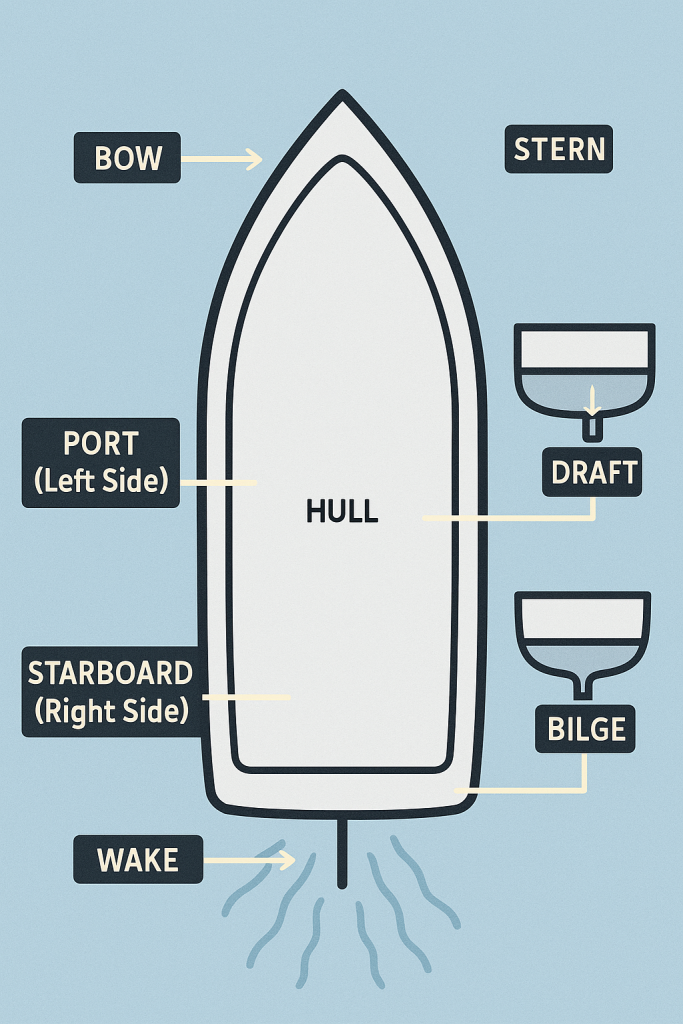
If you're new to boating, understanding basic boating terms is essential for safety, communication, and enjoyment on the water. This beginner-friendly guide clearly explains the most important boating terms you’ll encounter, making your transition from landlubber to boater much easier.
Basic Boat Parts Every Beginner Should Understand
1. Bow
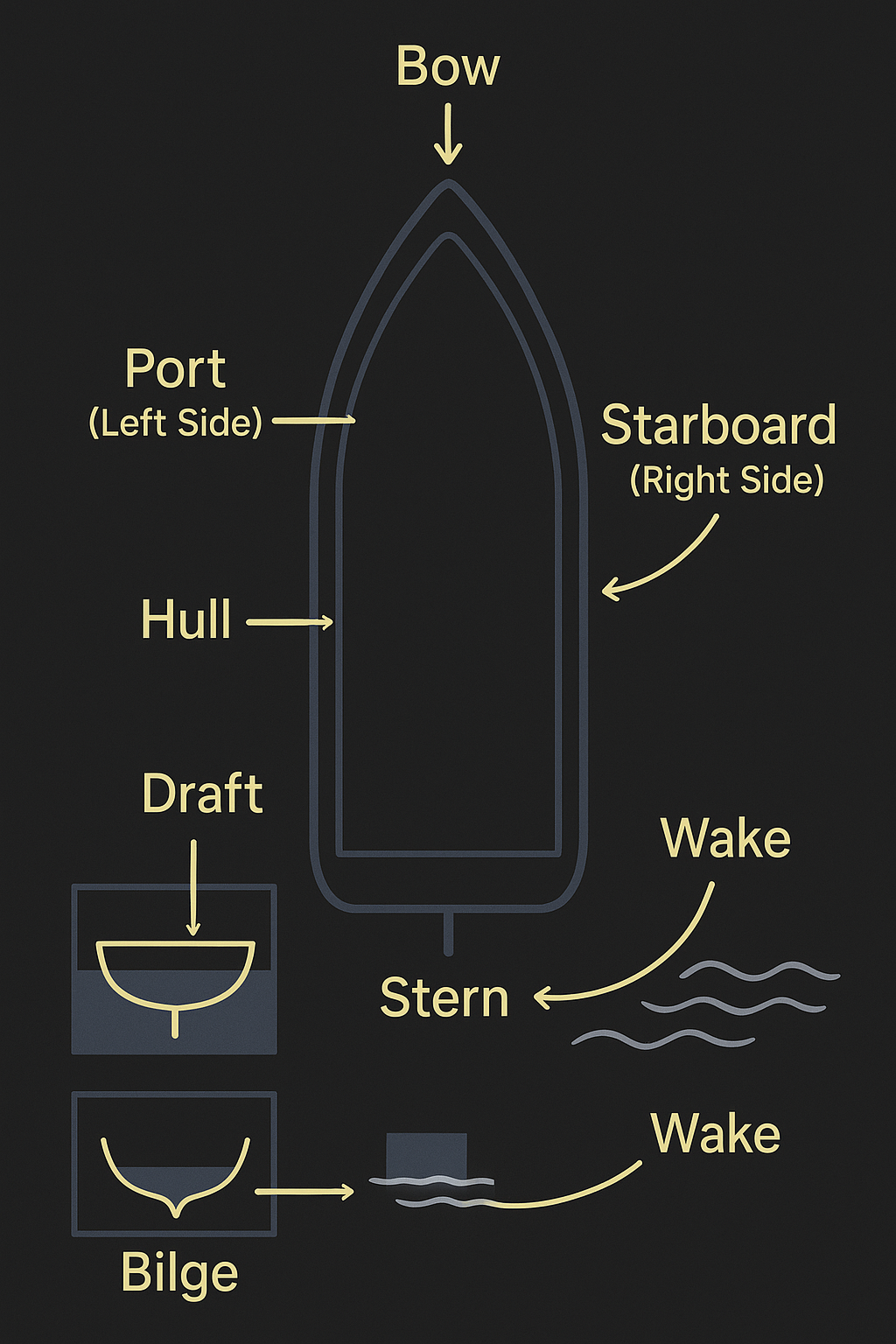
The front end of the boat, usually pointed to help cut through water smoothly.
2. Stern
The rear end of the boat, typically where you’ll find the engine or motor.
3. Port
The left side of the boat when you’re facing forward. Remember, "port" and "left" each have four letters.
4. Starboard
The right side of the boat when facing forward. Traditionally, boats were steered from this side.
5. Hull
The main structural body of the boat that sits in the water. A well-maintained hull ensures your boat floats safely.
6. Draft
The depth of your boat’s hull beneath the waterline. Understanding your boat's draft helps prevent running aground in shallow areas.
7. Bilge
The lowest inner part of the hull where water tends to collect. Regularly checking and draining the bilge keeps your boat balanced and safe.
8. Gunwale (pronounced "Gunnel")
The top edge of the boat’s sides, providing structural support and stability.
9. Transom
The flat, vertical section at the stern, typically where an outboard motor attaches.
Essential Safety and Operational Terms for First-Time Boaters
10. Anchor
A heavy device attached to your boat by a rope or chain, used to keep your boat securely in place and prevent drifting.
11. Cleat
A metal or plastic fitting used to secure ropes when docking or mooring your boat.
12. Fender
Cushions placed between your boat and a dock or another boat, preventing damage from collision or rubbing.
13. Helm
The steering wheel or device that lets you control your boat’s direction.
14. Mooring
The act of securing your boat to a fixed structure such as a buoy, dock, or anchor point to ensure it remains stationary.
15. Knot (Speed)
The measurement used for boat speed, equal to one nautical mile per hour (approx. 1.15 mph or 1.85 km/h).
16. Wake
Waves generated by your boat moving through water. Always manage your wake responsibly to maintain safety and respect toward other boaters and wildlife.
Directional Boating Terms
17. Fore
Refers to the forward part of your boat, near the bow.
18. Aft
Refers to the rear part of your boat, near the stern.
Why Understanding These Boating Terms Matters
Familiarizing yourself with these fundamental boating terms enhances communication aboard your boat, improves safety, and boosts your confidence. Whether you’re discussing docking techniques, safety protocols, or simply navigating waters, these terms form the basic language of boating.